

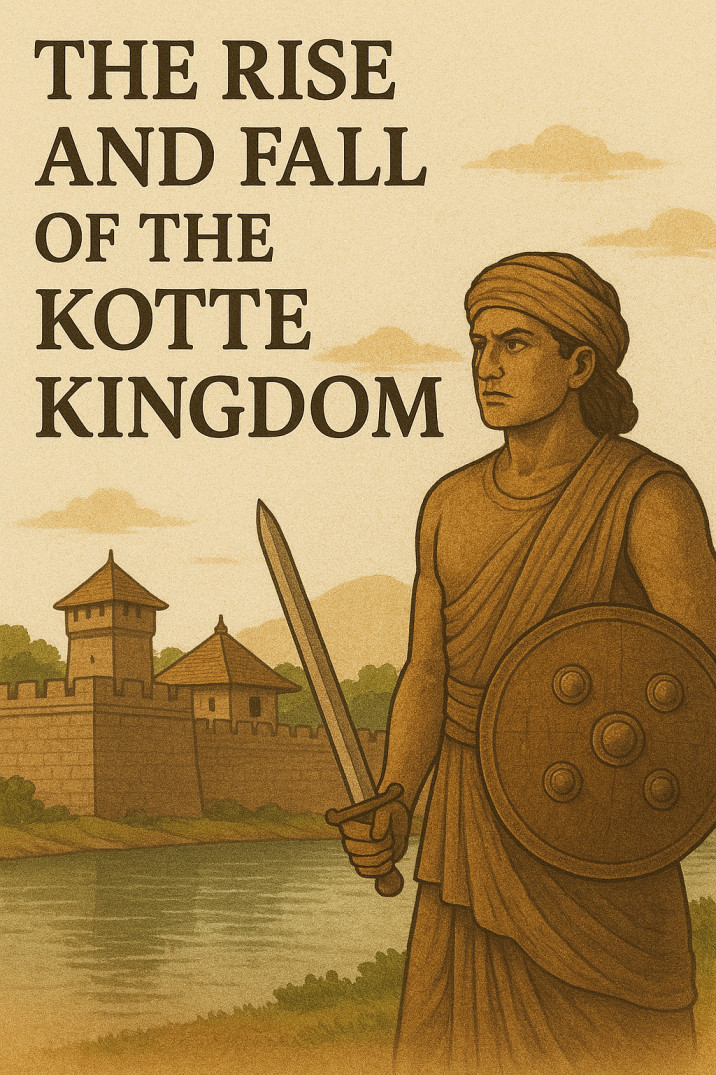

The Rise and Fall of the Kotte Kingdom: A Turning Point in Sri Lankan History
The Rise and Fall of the Kotte Kingdom: A Turning Point in Sri Lankan History
The island of Sri Lanka has seen the rise of many ancient kingdoms—each shaping the country's culture, religion, and political identity. Among these, the Kotte Kingdom holds a unique place in the history of Sri Lanka. Established in the 15th century, it was a period of both cultural brilliance and political vulnerability. For tourists and researchers, exploring the legacy of the Kotte Kingdom offers deep insights into Sri Lanka’s historical evolution, especially during the pre-colonial era.
This article by Journal of Sri Lanka explores the origin, development, achievements, and eventual decline of the Kotte Kingdom, while embedding on-page SEO keywords relevant for history, travel, and cultural tourism.
📜 Origin of the Kotte Kingdom
The Kotte Kingdom was founded in the early 15th century by King Parakramabahu VI. The capital, Sri Jayawardenepura Kotte, was located near modern-day Colombo, making it one of the few ancient capitals situated in the western lowlands of Sri Lanka.
This kingdom marked a shift in royal power from the central highlands (such as Gampola and Kurunegala) to the coastal areas—largely due to the rising influence of maritime trade and foreign diplomacy.
🛡️ The Rise Under King Parakramabahu VI
Parakramabahu VI is considered the greatest monarch of the Kotte Kingdom. His reign (1412–1467) is often seen as a golden era marked by:
- Unification of the entire island under one rule (a rare occurrence in Sri Lankan history).
- Promotion of Buddhism in Sri Lanka through the restoration of temples and patronage to monks.
- Growth in literature and arts, including the revival of classical Sinhala and Pali writing.
- Establishment of Kotte as a major urban and cultural center, supported by a fortified city layout and royal palace.
This period is particularly significant for researchers studying the origin of Sri Lanka’s modern capital and its transformation through time.
🏛️ Cultural and Religious Contributions
Despite the military and political struggles that followed, the Kotte Kingdom was renowned for its religious and artistic achievements. Some of the key Buddhist sites and contributions from this period include:
- Dalada Perahera (Tooth Relic procession): The sacred Tooth Relic of Buddha was held in Kotte for many years, strengthening the kingdom’s religious stature.
- Buddhist monasteries and temples flourished, attracting scholars from across South Asia.
- Construction of Vihara Mahadevi Park, and expansion of Kelaniya Raja Maha Vihara, both holding historic value today.
If you're wondering why choose Sri Lanka for religious tourism, the Kotte period is one of many answers—offering deep spiritual and architectural connections to Sri Lankan Buddhist history.
🌍 Trade, Foreign Influence, and Early Colonial Contact
During the 15th century, Sri Lanka was at the crossroads of maritime trade routes. The Kotte Kingdom engaged in diplomatic and commercial relations with South India, China, and later, the Portuguese.
- Trade items included spices, ivory, and precious stones, which attracted European interest.
- In 1505, Portuguese explorers arrived in Kotte, initially forging peaceful relations.
This early contact would later evolve into colonial occupation, signaling the start of a turbulent new era in the history of Ceylon.
⚔️ The Decline of the Kotte Kingdom
Following Parakramabahu VI’s death, the kingdom weakened due to internal power struggles, succession disputes, and growing foreign influence.
Key factors that led to its downfall:
- Division of the kingdom among rival princes, leading to civil unrest.
- Rise of external threats from South Indian kingdoms and the expanding Kandyan Kingdom.
- Increasing Portuguese interference, which escalated from trade agreements to military control.
- Loss of public confidence due to taxation and religious favoritism.
Eventually, the kingdom fractured, and by the late 16th century, most of its territories were either under Portuguese control or had been absorbed into other local kingdoms like Kandy and Sitawaka.
🧭 Visiting the Remnants of Kotte Today
Though much of the ancient Kotte Kingdom has been overtaken by modern urban development, there are still historical remnants for tourists and researchers to explore:
- Kotte Rajamaha Viharaya: A historic Buddhist temple that stands on the original royal grounds.
- Kotte Archaeological Museum: Displays artifacts from the kingdom, including weapons, coins, and inscriptions.
- Diyawanna Oya wetlands: Scenic location that surrounded the original city with natural defenses.
Walking through Kotte today, it's hard to believe it once housed a mighty kingdom. But with guided tours and local historical sites, one can still trace the legacy of this pivotal chapter in Sri Lanka's past.
🤔 India vs Sri Lanka: Influence or Independence?
While Sri Lanka was never part of India, the Kotte Kingdom—like other Sri Lankan kingdoms—had diplomatic exchanges and cultural overlaps with South India. Still, it remained politically independent.
This question—“Is Sri Lanka an Indian part?”—often comes up, but the Kotte era shows how the island carved out its own political and religious identity, even when engaging with neighboring powers.
🧳 Why Tourists and Researchers Should Study Kotte
If you're visiting Sri Lanka, exploring the Kotte Kingdom offers a refreshing departure from more commercialized heritage sites. Here’s why:
- It’s less crowded yet historically rich.
- Offers a bridge between ancient Sri Lanka and early colonialism.
- Showcases a unique blend of politics, Buddhism, and art.
- Conveniently located near Colombo—easy access for short trips.
Whether you're a traveler seeking hidden historical gems or a researcher studying Sri Lanka's dynastic transitions, Kotte holds incredible value.
📌 Conclusion
The Kotte Kingdom was more than a brief reign—it was a turning point in Sri Lankan history. From cultural achievements to political turmoil, and from Buddhist patronage to colonial confrontations, it represents the complexity of Sri Lanka’s past. Today, its stories live on through ancient temples, hidden ruins, and passionate local historians.
At journalofsrilanka, our mission is to bring these untold stories to light—offering travelers, scholars, and culture seekers a deeper look into the history of Sri Lanka.
 The Rise and Fall of the Kotte Kingdom:...