

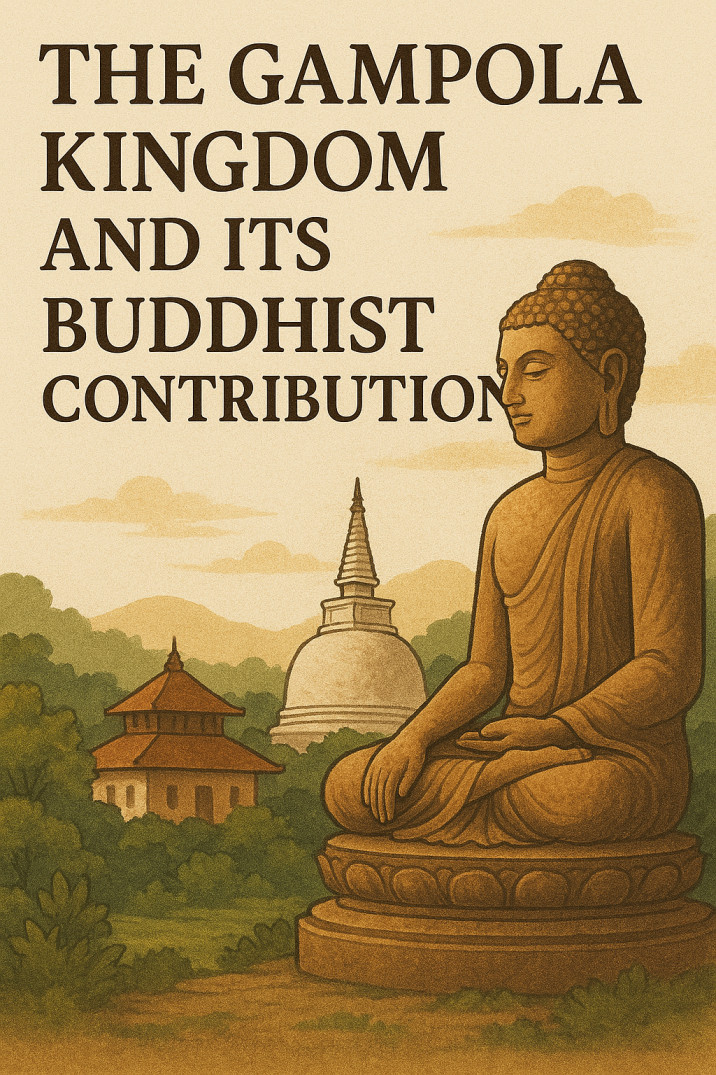

The Gampola Kingdom and Its Buddhist Contributions
The Gampola Kingdom and Its Buddhist Contributions
Nestled within the central highlands of Sri Lanka, the Gampola Kingdom may not be as well-known as Anuradhapura or Polonnaruwa, but it played a critical transitional role in the history of Sri Lanka. Flourishing in the 14th century, the Gampola period marked a unique fusion of Buddhist heritage, artistic innovation, and political restructuring. For tourists, history enthusiasts, and researchers, exploring this era opens a window into a lesser-known yet significant chapter in Sri Lankan history.
In this article, we’ll delve into the origins of the Gampola Kingdom, its Buddhist contributions, and why it remains a compelling destination for those who want to experience authentic Sri Lankan culture and ancient architecture.
Origin of the Gampola Kingdom
The Gampola Kingdom was established in the early 14th century after the decline of the Dambadeniya Kingdom. It rose to prominence under King Buwanekabahu IV, who shifted the capital to Gampola, a town surrounded by mountains and rivers, located near Kandy.
One of the common questions people ask is, “Is Sri Lanka part of India?” While the island has been influenced by Indian dynasties and religions, the story of Gampola underscores how Sri Lanka developed its own sovereign identity and spiritual legacy.
Gampola: A Buddhist Center of Learning
One of the most enduring legacies of Gampola was its deep commitment to Buddhism. During this era, Buddhism not only flourished in practice but also inspired art, literature, and architecture.
1. Lankatilaka Vihara
Built by King Buwanekabahu IV and later expanded by King Parakramabahu V, this magnificent temple showcases Gampola-era Buddhist architecture. With a blend of South Indian Dravidian and Sinhalese styles, Lankatilaka Vihara features towering walls, intricate stone carvings, and sacred Buddhist statues.
2. Gadaladeniya Temple
Constructed on a rock outcrop, this temple is another crown jewel of the Gampola period. It was built by Gampola’s chief minister, using South Indian craftsmen, which resulted in a unique architectural style that blends Hindu and Buddhist elements. The temple remains active to this day and is a key site on many Sri Lanka tour guide itineraries.
3. Ambekke Devalaya
Though primarily a shrine for a deity, this temple is admired for its masterful wood carvings. The Gampola era emphasized artistic excellence, and Ambekke is often referred to as having the finest woodwork in Sri Lanka.
Why Choose Sri Lanka to Study Buddhism and History?
If you're a traveler wondering why choose Sri Lanka over other destinations, Gampola offers a compelling answer. This ancient kingdom was not just a political seat but a spiritual beacon. Temples from this period continue to host Buddhist rituals, and their architecture serves as a visual narrative of the island's religious evolution.
For academic researchers, Sri Lanka provides an open field for exploring the history of Ceylon, especially the ways it maintained its unique cultural identity while adopting elements from neighboring civilizations like India.
The Political Importance of Gampola
While the Gampola period was relatively short-lived compared to other kingdoms, it was politically significant. It served as a buffer era between the Dambadeniya and Kotte kingdoms. Gampola’s strategic location allowed rulers to protect their domain from South Indian invasions, which had disrupted earlier kingdoms.
This brings up the often-asked question: India vs Sri Lanka—how are they different yet connected? While South Indian Chola and Pandya invasions played a role in Sri Lanka’s past, the country’s ability to rebuild and realign politically, as seen in the Gampola era, speaks volumes about its resilience.
Art, Architecture, and Literature in Gampola
The Gampola period marked a time of artistic renaissance. In addition to temples, this era saw the growth of religious literature and murals. The paintings found in Lankatilaka and Gadaladeniya reflect a high degree of skill and religious devotion.
- Wall Murals: These depict scenes from the Jataka tales (stories of Buddha’s past lives).
- Scriptural Work: Buddhist texts were rewritten and preserved in temple libraries.
- Inscriptions: Stone and copperplate inscriptions from the Gampola period help us understand administrative systems and religious endowments.
Is Gampola Worth Visiting Today?
Absolutely! Today, Gampola is a tranquil town, not overrun by tourism, which makes it ideal for authentic travel experiences. Some reasons to include Gampola in your Sri Lanka itinerary:
- Close proximity to Kandy and the Temple of the Tooth
- Rich history tied to Buddhism in Sri Lanka
- Less crowded compared to Anuradhapura and Polonnaruwa
- Unique architecture combining Sri Lankan and South Indian design elements
Conclusion
The Gampola Kingdom, though often overlooked, played a vital transitional role in the history of Sri Lanka. Its rulers protected Buddhist traditions, promoted temple-building, and helped bridge the gap between ancient and more modern Sri Lankan kingdoms. For those exploring Sri Lankan culture, Buddhism, and medieval architecture, Gampola is a goldmine.
As a travel enthusiast, researcher, or spiritual pilgrim, visiting the sites of Gampola gives you a deeper understanding of how Sri Lanka's identity has evolved. At journalofsrilanka, we strive to uncover these hidden gems that define the soul of this island nation.
 The Gampola Kingdom and Its Buddhist Con...