

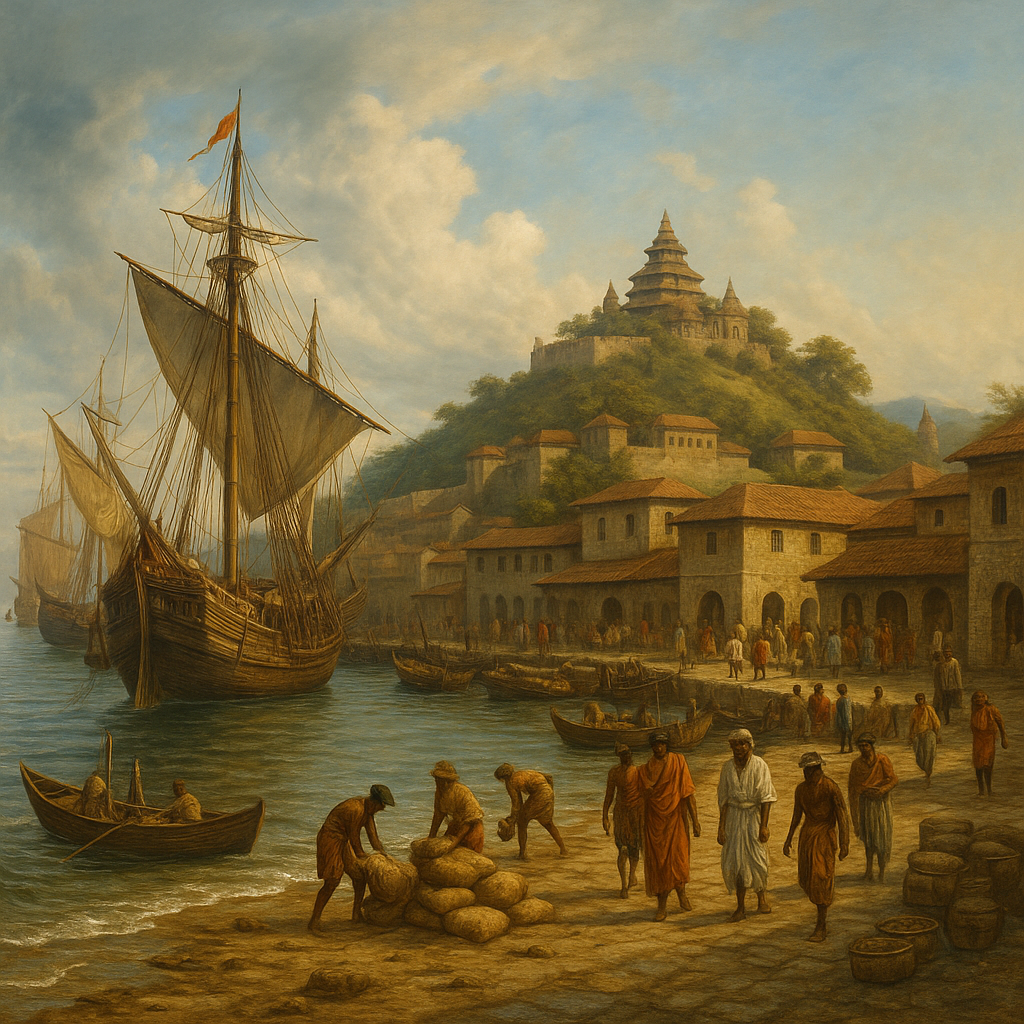

The Economic History of Sri Lanka: From Ancient Trade to Modern Times
Sri Lanka’s economy has evolved over more than two millennia — from an island thriving on ancient maritime trade routes to a modern developing economy integrating into the global market. This journey reflects the resilience and adaptability of the Sri Lankan people, shaped by both opportunity and adversity.
Ancient Trade and Early Economic Systems
-----------------------------------------
Sri Lanka’s position in the Indian Ocean placed it at the heart of global commerce long before the modern era. Known as Taprobane by the Greeks and Serendib by Arab traders, the island served as a vital stop along the maritime Silk Route connecting East Asia, the Middle East, and Europe.
Archaeological evidence from Anuradhapura and Polonnaruwa reveals sophisticated urban economies. Ancient Sri Lankans exported pearls, gemstones, elephants, cinnamon, and ivory — commodities that drew traders from Persia, Arabia, and Rome.
The great ports of Mantai and Galle flourished as international trade hubs, while inland economies relied heavily on agriculture supported by intricate irrigation systems such as Kala Wewa and Parakrama Samudraya.
The Buddhist monasteries also played an economic role — functioning as centers of education, charity, and even land management. Monastic ownership of farmland helped sustain agriculture during periods of political instability.
Colonial Period and Economic Transformation
-------------------------------------------
From the 16th to 20th centuries, Sri Lanka (then Ceylon) was successively ruled by the Portuguese, Dutch, and British — each transforming the island’s economy in unique ways.
Portuguese (1505–1658): Focused primarily on controlling coastal trade and collecting tributes.
Dutch (1658–1796): Introduced organized cinnamon cultivation and monopolized the spice trade.
British (1796–1948): Reshaped the island’s economy for export-oriented agriculture. They introduced coffee plantations, followed by tea and rubber after the coffee blight of 1869.
British rule also brought railways, roads, ports, and administrative reforms — all aimed at boosting exports rather than developing local industries. The plantation economy, while profitable, deepened social inequality and created lasting economic imbalances between the lowlands and highlands.
Post-Independence Economic Challenges
-------------------------------------
After gaining independence in 1948, Sri Lanka faced the challenge of building a self-sufficient national economy. The government pursued import substitution, nationalization of key industries, and an expanded public sector.
In the 1970s, economic stagnation led to major policy shifts. Under President J. R. Jayewardene, Sri Lanka opened its economy in 1977 — becoming one of South Asia’s first countries to embrace liberalization and foreign investment. The establishment of Free Trade Zones in Katunayake and Biyagama marked the beginning of a new era.
However, decades of civil conflict (1983–2009) drained resources and slowed growth. Infrastructure suffered, investor confidence declined, and regional inequality deepened. Despite these struggles, Sri Lanka maintained strong human development indicators — especially in education and health.
Modern Economic Growth and Diversification
------------------------------------------
The 21st century has seen efforts to diversify Sri Lanka’s economy beyond agriculture and garments. Tourism, information technology, financial services, and remittances from overseas workers now contribute significantly to GDP.
Key modern projects include:
- Colombo Port City – a major financial and real estate development.
- Southern Expressway & Central Expressway – boosting regional connectivity.
- Renewable energy projects – focusing on solar and wind development.
Post-war reconstruction created opportunities but also increased public debt. The Easter attacks (2019) and the COVID-19 pandemic severely impacted tourism and foreign exchange reserves, culminating in the 2022 financial crisis — the worst in the country’s modern history. The crisis prompted reforms in governance, taxation, and import policy aimed at restoring stability.
Sustainability and Future Outlook
---------------------------------
Today, Sri Lanka’s economy stands at a crossroads. The challenge is to rebuild trust, attract foreign investment, and ensure sustainable growth that benefits all citizens.
Sectors like renewable energy, digital technology, organic agriculture, and eco-tourism hold immense potential. Moreover, strengthening education and innovation can transform Sri Lanka from a consumer economy into a knowledge-driven one.
While external debt and inflation remain hurdles, the island’s strategic location, cultural richness, and entrepreneurial spirit provide the foundation for recovery. If policy and governance improve, Sri Lanka can once again become a thriving trade hub of the Indian Ocean.
Published by Journal of Sri Lanka – www.journalofsrilanka.com
 The Economic History of Sri Lanka: From...