

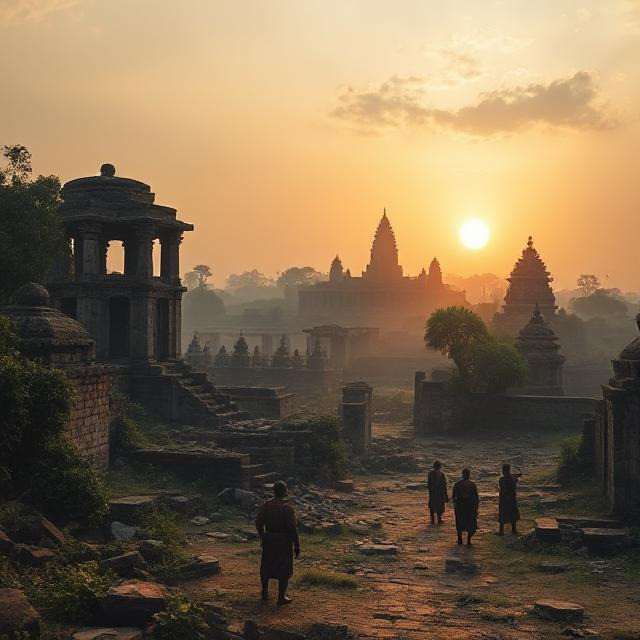

The Decline of the Polonnaruwa Kingdom
Introduction
The Polonnaruwa Kingdom was one of the most significant periods in Sri Lankan history, marking an era of great architectural and agricultural advancements. However, like all great civilizations, it eventually faced decline. Understanding the reasons behind its fall provides insight into the political, economic, and external challenges that shaped the island’s history. This article explores the decline of the Polonnaruwa Kingdom, offering a detailed analysis for history enthusiasts and tourists interested in Sri Lanka's past.
The Rise and Prosperity of Polonnaruwa
Polonnaruwa became the capital of Sri Lanka after the fall of Anuradhapura in the 10th century AD. It was under the reign of King Vijayabahu I that the kingdom saw its resurgence, followed by the golden age under King Parakramabahu I. During this time, Polonnaruwa became a hub for irrigation, trade, and Buddhist culture, with remarkable contributions such as the Parakrama Samudra and grand architectural structures. However, the very factors that led to its prosperity also contributed to its downfall.
Factors Leading to the Decline
1. Foreign Invasions and Internal Struggles
One of the primary reasons for the decline of the Polonnaruwa Kingdom was foreign invasions. The Chola invasions from South India weakened the political stability of the region, leading to continuous conflicts and resource depletion. The invasion of Kalinga Magha in the early 13th century was particularly devastating. His brutal rule led to destruction, forcing many people to flee to the southern regions of Sri Lanka.
Additionally, internal power struggles among Sinhalese rulers resulted in frequent changes in leadership, weakening the kingdom’s stability. The constant battles for power among regional rulers made it difficult to maintain unity and defense against external threats.
2. The Decline of the Irrigation System
Polonnaruwa was known for its advanced irrigation systems, which supported agriculture and ensured food security. However, with political instability and lack of proper maintenance, the once-great irrigation network began to deteriorate. The failure of these systems led to declining agricultural productivity, famine, and economic hardships, further contributing to the kingdom’s fall.
3. Shifts in Trade and Economic Decline
The decline in trade also played a crucial role in Polonnaruwa’s downfall. During its peak, Polonnaruwa was a center for international trade, connecting Sri Lanka to India, China, and the Middle East. However, due to external invasions and instability, trade routes were disrupted, and economic activity declined. Without strong economic support, the kingdom could not sustain its military and administrative infrastructure.
4. Relocation of the Capital
As Polonnaruwa became increasingly vulnerable to invasions and natural disasters, the Sinhalese rulers decided to relocate the capital to safer locations in the central and southern regions of Sri Lanka. By the 13th century, Dambadeniya became the new political center, marking the end of Polonnaruwa’s prominence.
The Legacy of Polonnaruwa
Despite its decline, Polonnaruwa remains a historical treasure trove for tourists and history lovers. The ruins of this once-glorious kingdom, including the Gal Vihara, Parakrama Samudra, and the Royal Palace, continue to attract visitors from around the world. The ancient city is now a UNESCO World Heritage Site, preserving the legacy of one of Sri Lanka’s most remarkable eras.
Conclusion
The fall of the Polonnaruwa Kingdom was the result of multiple factors, including foreign invasions, internal conflicts, irrigation system failures, economic decline, and the relocation of the capital. While the kingdom may have faded from political prominence, its cultural and historical significance continues to captivate those exploring Sri Lanka’s rich heritage. For tourists and history enthusiasts, Polonnaruwa serves as a reminder of the island’s resilience and the grandeur of its past civilizations.
 The Decline of the Polonnaruwa Kingdom