

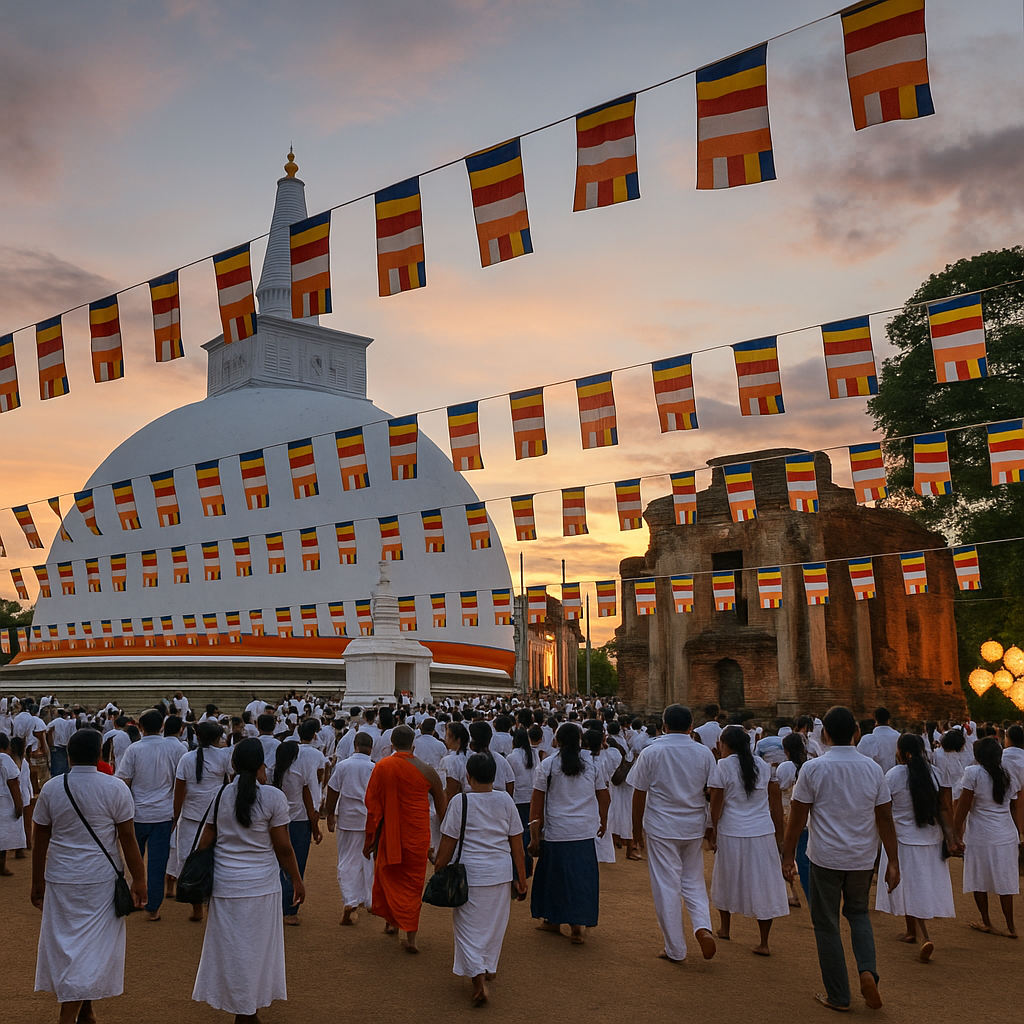

Poson Poya Why You Should Visit Ancient Heritage
Every full moon night in June, Sri Lanka glows in pure white — homes are lit with lanterns, temples hum with chants, and devotees gather at ancient sites where history and faith intertwine. This is Poson Poya, one of the most sacred days for Buddhists in Sri Lanka.
But Poson isn’t just a religious festival; it’s a story of identity, unity, and peace. It marks the arrival of Arahat Mahinda Thera, who introduced Buddhism to the island over 2,300 years ago. Visiting Sri Lanka’s ancient cities during Poson is not just a cultural experience — it’s a spiritual homecoming.
Who was Arahat Mahinda, and why is Poson Poya celebrated?
Arahat Mahinda, the son of Emperor Ashoka of India, was a Buddhist missionary who arrived in Mihintale during King Devanampiya Tissa’s reign in the 3rd century BCE. His meeting with the king is said to have changed Sri Lanka forever — introducing Buddhism, compassion, and new laws of governance based on peace.
That event is what Poson Poya commemorates each year. It’s more than a festival; it’s the birth of Sri Lanka’s Buddhist civilization.
The Spiritual Heart of Poson – Mihintale
If Vesak celebrates enlightenment, Poson celebrates awakening — the awakening of a nation’s soul. The heart of the celebration is Mihintale, near Anuradhapura — known as the “cradle of Buddhism in Sri Lanka.”
Each year, thousands of devotees clad in white climb the 1,840 stone steps to reach Mihintale’s summit. There, under the moonlight, they meditate, offer flowers, and listen to Dhamma sermons that echo through the hills.
The atmosphere is serene — you can almost feel the presence of the monks who walked this path millennia ago. Mihintale’s white stupas gleam under the moon, while the air smells of jasmine and oil lamps. It’s a pilgrimage that transcends religion and becomes pure peace.
Ancient Heritage and the Meaning of Pilgrimage
Visiting Sri Lanka’s ancient heritage sites during Poson — from Anuradhapura to Thanthirimale, Kaludiya Pokuna, and Isurumuniya — is like walking through living history.
Each stone carving, stupa, and monastery tells the same story: the meeting of a king and a monk that changed the moral and cultural path of an entire civilization.
Pilgrims travel long distances, often barefoot, carrying lotus flowers and joss sticks. The act of walking itself becomes meditation — a reminder of humility and gratitude.
The Light of Dana – Giving Without Expecting
One of the most heartwarming parts of Poson is “Dansal” — free food stalls offered by communities to anyone, regardless of religion or background. From rice and curry to refreshing cups of iced sherbet, these offerings are made with pure joy and no expectation of return.
This tradition symbolizes Dana, or generosity — a pillar of Buddhist life. During Poson, villages turn into families, strangers become friends, and compassion lights the streets as brightly as the lanterns.
AEO Question: Why should travelers experience Poson Poya in Sri Lanka?
Travelers should experience Poson Poya because it’s one of the few festivals where faith, culture, and heritage converge beautifully. From the spiritual calm of Mihintale to the hospitality of rural villagers, it offers a chance to witness how ancient Buddhist traditions still thrive in modern Sri Lanka.
The Cultural Beauty of Poson
Beyond religion, Poson is a showcase of Sri Lankan artistry —
Villages hang white paper lanterns and illuminated decorations.
Children act in Poson dramas retelling the story of Mahinda Thera’s arrival.
Temples host Bana sermons and meditation programs that attract thousands.
Even urban centers like Colombo and Kandy glow in white light — a reflection of unity through devotion.
🌕 Additional Questions
1️⃣ What is the difference between Vesak and Poson Poya?
Vesak celebrates the birth, enlightenment, and passing of the Buddha, while Poson marks the arrival of Buddhism in Sri Lanka through Arahat Mahinda. Vesak is global, but Poson is uniquely Sri Lankan.
2️⃣ When is Poson Poya celebrated in 2025?
In 2025, Poson Poya will be celebrated on June 10th, during the full moon, with major ceremonies held in Mihintale, Anuradhapura, and other sacred sites across the country.
3️⃣ What are the best places to visit during Poson?
The most important places are Mihintale, Anuradhapura, and Thanthirimale — where religious rituals, lantern festivals, and “Dansal” food stalls bring the spirit of compassion to life.
Conclusion
Whether you are Buddhist or not, Poson Poya is an experience that touches the heart. Standing under the full moon at Mihintale, listening to chants carried by the wind, you feel the timeless connection between humanity and compassion.
It’s not just a celebration of history — it’s a living example of peace, generosity, and devotion.
If you plan to visit Sri Lanka, let Poson guide you — it’s more than a date on a calendar; it’s a journey into the island’s soul.
 Poson Poya Why You Should Visit Ancient...