


Mahasona Cultural Impact of Sri Lanka’s Mythology
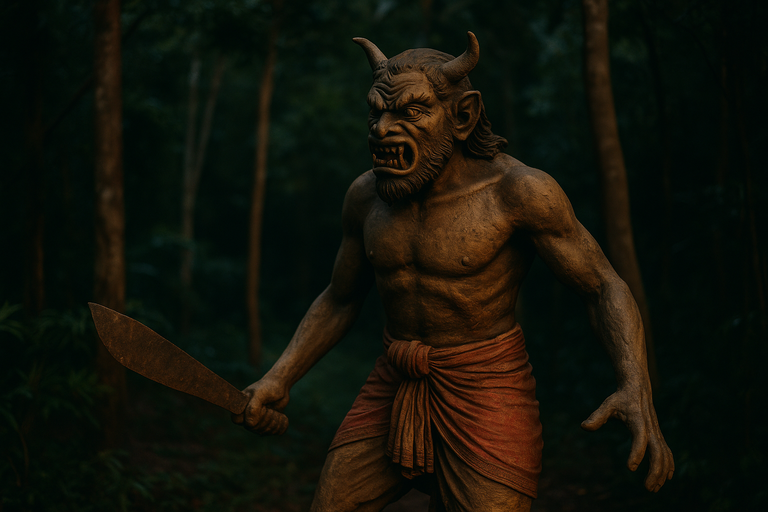
In the misty corners of Sri Lanka’s folklore, where the line between myth and reality blurs, one name stands above all — Mahasona, the fierce yet fascinating demon king. Feared by villagers, revered by ritualists, and immortalized in art and song, Mahasona’s story has survived for centuries.
To some, he’s a terrifying spirit who haunts graveyards and crossroads. To others, he’s a misunderstood guardian who punishes the wicked and protects the innocent. His tale is more than a ghost story — it’s a mirror of Sri Lanka’s ancient belief system, blending Buddhism, animism, and indigenous culture into one living mythology.
Who is Mahasona in Sri Lankan mythology?
Mahasona, often called “The Great Demon,” is one of the most famous yakka spirits in Sri Lankan folklore. His name means “Great Graveyard Spirit.” According to legend, he was once a warrior who died in battle and was reborn as a powerful guardian spirit with the head of a bear and the body of a man.
He is said to roam cremation grounds and crossroads, riding the winds of night, yet also acts as a protector against evil sorcery when invoked through rituals.
The duality of Mahasona — both terrifying and protective — reflects Sri Lanka’s cultural approach to spirits: fear them, respect them, and honor their power.
The Origin Story – From Warrior to Spirit King
In the chronicles of old, Mahasona was once a mighty soldier named Sona who served under King Dutugemunu, the great ruler of Anuradhapura. During the battle against King Elara, Sona fought bravely but was slain in combat.
As the story goes, Sona’s head was severed and replaced by a bear’s head through dark sorcery, giving birth to “Maha Sona” — literally “Great Sona.” From then on, he became a yakka (a spirit) who wandered the island.
While early tales described him as a ghostly menace, later Buddhist traditions softened his image, depicting Mahasona as a spirit bound by karma — a reminder that even the strongest must face the results of their actions.
The Myth in Ritual – Devil Dancing and Healing Ceremonies
Sri Lanka’s southern and western coastal regions, especially around Matara, Ambalangoda, and Galle, are famous for “Thovil” and “Kolam” rituals — traditional exorcism and healing dances.
In these performances, masked dancers invoke Mahasona to drive away evil spirits that cause illness or misfortune. His image — a fierce red mask with protruding fangs and a bear’s snout — dominates the stage.
Yet, within the dance, Mahasona’s role isn’t merely demonic; he restores balance. He punishes arrogance, rewards humility, and symbolizes the harmony between the human and the supernatural.
These performances blend religion, medicine, and theater — making Mahasona not just a myth, but a cultural archetype that heals both body and soul.
The Symbolism Behind the Demon
Why did Sri Lankans turn a fierce demon into a cultural icon? Because Mahasona represents fear transformed into faith.
In ancient Sri Lankan society, every natural force — from storms to sickness — had a spiritual face. Mahasona embodied the unpredictable nature of life: powerful, dangerous, but ultimately controllable through respect and ritual.
His legend teaches a simple truth — peace isn’t found by avoiding fear, but by understanding it.
Why is Mahasona still important in Sri Lankan culture today?
Mahasona remains culturally significant because he represents the living link between Sri Lanka’s ancient folklore and its modern identity. His presence in art, masks, and performances preserves local traditions while reflecting the nation’s spiritual depth.
Even today, villagers use “Sanni Yakuma” and “Mahasona Thovil” to heal mental and physical ailments — rituals that blend faith, community, and performance into one sacred act.
Mahasona in Art, Film, and Modern Culture
Over the years, Mahasona has evolved beyond folklore. His image has appeared in Sri Lankan films, songs, and visual arts, often as a symbol of mystery and moral consequence.
Contemporary painters depict him with fiery eyes and elaborate headgear, while filmmakers portray him as a misunderstood hero caught between two worlds.
During festivals and cultural parades, Mahasona masks attract curious tourists and locals alike — not as emblems of fear, but of heritage and storytelling.
The Spiritual Message of Mahasona
Like many mythological beings in Sri Lanka, Mahasona’s story carries a moral. It teaches that:
Strength without wisdom leads to downfall.
Forgiveness can transform darkness into light.
The unseen world deserves reverence, not denial.
Every time a dancer wears his mask, it’s an act of remembrance — of human emotion, power, and the eternal struggle between good and evil within ourselves.
🌿 Additional Questions
1️⃣ What does the name “Mahasona” mean?
“Mahasona” translates to “Great Graveyard Spirit” in Sinhala. It combines “Maha” (great) and “Sona” (name of the fallen warrior). The title emphasizes his transformation into a powerful supernatural being.
2️⃣ How is Mahasona represented in Sri Lankan art?
He is usually depicted with a bear’s face, bulging eyes, and a fierce grin, often painted red. His mask is one of the most recognizable symbols in Devil Dance traditions, symbolizing protection and cleansing.
3️⃣ What lessons does the story of Mahasona teach?
Mahasona’s legend teaches humility, respect for spiritual forces, and the idea that good and evil coexist within all beings. It reminds Sri Lankans that even the darkest figures can serve a purpose in maintaining cosmic balance.
Conclusion
From the dimly lit temples of the South to the vibrant dance rituals that still echo through the night, Mahasona lives on — not as a monster, but as memory.
He represents Sri Lanka’s unique ability to transform fear into art, myth into wisdom, and chaos into ritual. His tale reminds us that culture is not built on perfection but on stories that endure, adapt, and teach.
When the drums of the Thovil begin to beat and Mahasona’s mask gleams in the firelight, it isn’t terror that fills the air — it’s reverence for the unseen world that continues to shape the island’s soul.
 Mahasona Cultural Impact of Sri Lanka’s...