

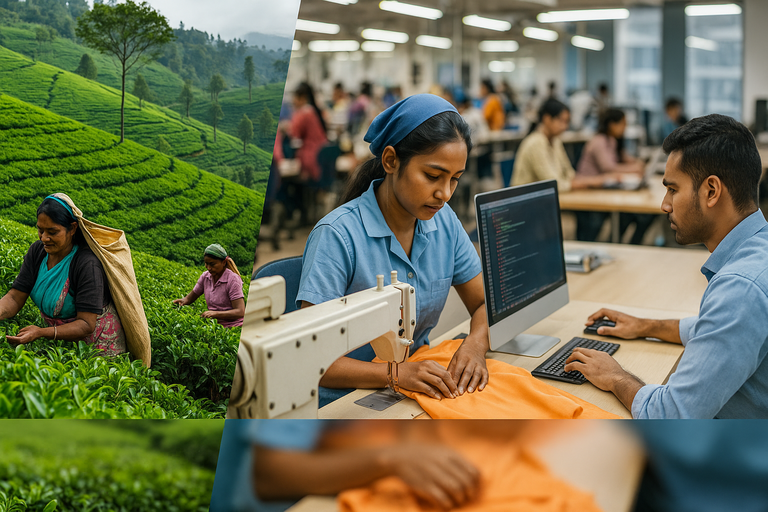

Export Industries in Sri Lanka: Tea, Garments, and IT
Sri Lanka’s economy has long been powered by its exports — from the world-famous Ceylon Tea to its thriving garment factories and emerging IT sector. Despite global challenges, exports continue to play a vital role in driving foreign exchange, employment, and innovation. Today, as the country seeks sustainable recovery, these industries remain the foundation of Sri Lanka’s global identity and economic strength.
🍃 The Legacy of Ceylon Tea
Tea is not just an export for Sri Lanka — it’s a symbol of national pride.
Introduced during the British colonial era after a coffee blight in the 1860s, tea rapidly became the island’s signature export. Today, Sri Lanka ranks among the top tea exporters in the world, renowned for quality, purity, and aroma.
Major tea-growing regions — Nuwara Eliya, Kandy, and Uva — produce distinct flavors that command premium prices globally. The industry employs over one million people, including smallholder farmers and estate workers, many from rural communities.
In recent years, the tea industry has faced challenges like fluctuating global prices, climate change, and labor shortages. However, diversification into organic teas, herbal infusions, and value-added packaging is helping Sri Lanka maintain competitiveness in a demanding global market.
🧵 The Garment and Apparel Industry
The apparel industry is the largest contributor to Sri Lanka’s export revenue, accounting for nearly 40–45% of total exports. Starting in the late 1970s under the open economy policy, Sri Lanka’s garment factories built a reputation for high-quality manufacturing, ethical labor practices, and sustainability.
Companies like MAS Holdings, Brandix, and Hirdaramani supply global brands such as Nike, Victoria’s Secret, and Marks & Spencer.
Unlike low-cost competitors, Sri Lanka’s success lies in its focus on design innovation, compliance, and green manufacturing. Many factories now operate under LEED-certified standards, making Sri Lanka a leader in ethical apparel production.
The sector employs over 350,000 workers, mostly women, empowering rural communities and supporting gender equality. Post-pandemic recovery has been steady, supported by digital tools and improved logistics.
💻 The Rise of the IT and BPO Sector
The most exciting growth story of recent years has been Sri Lanka’s IT and Business Process Outsourcing (BPO) industry. With a young, educated, English-speaking workforce, the country has emerged as a preferred destination for software development, fintech, and customer support services.
Colombo, Kandy, and Jaffna are developing as IT hubs, hosting both multinational companies and local startups. The Sri Lanka Association for Software and Service Companies (SLASSCOM) projects the sector could earn over US$3 billion annually by 2030.
Key advantages include:
Strong technical talent base
Competitive labor costs
Strategic time-zone alignment between Europe and Asia
Government initiatives supporting tech parks and e-governance
The IT sector also contributes indirectly by promoting digital literacy and remote work opportunities across rural areas.
🚢 Challenges Facing Export Industries
Despite progress, Sri Lanka’s export industries face common challenges:
Currency depreciation and inflation affecting production costs
Global trade slowdowns and competition from regional players
Dependence on imported raw materials for apparel and manufacturing
High logistics and shipping costs
Need for more trade diversification beyond traditional markets
To remain competitive, Sri Lanka must enhance trade agreements, reduce red tape, and invest in technology, automation, and research. The private sector continues to call for better infrastructure, consistent energy supply, and efficient port operations.
🌏 The Future of Sri Lankan Exports
The future of exports in Sri Lanka lies in diversification and innovation.
Emerging areas such as IT services, organic agriculture, renewable energy technology, and logistics are opening new pathways for growth. With strategic investment, Sri Lanka can shift from a commodity exporter to a value-added, innovation-driven economy.
Collaborations with countries in Asia, the Middle East, and Europe will also expand markets. Moreover, strengthening digital trade and e-commerce platforms will help small businesses reach global customers directly.
🌿 Conclusion
Sri Lanka’s export industries — tea, garments, and IT — symbolize its adaptability, creativity, and resilience.
While global economic turbulence remains a challenge, the island’s focus on quality, ethics, and innovation keeps it competitive.
By embracing technology and sustainability, Sri Lanka can ensure that its exports not only earn revenue but also reflect the best of its heritage and human potential.
Published by Journal of Sri Lanka – www.journalofsrilanka.com
 Export Industries in Sri Lanka: Tea, Gar...