

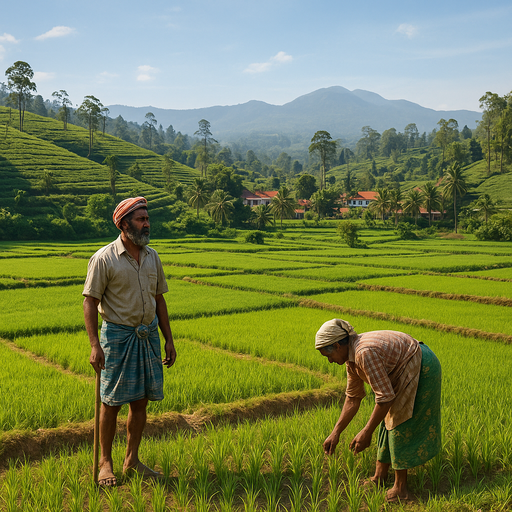

Agriculture and the Rural Economy of Sri Lanka
Agriculture has always been the beating heart of Sri Lanka’s economy. From ancient irrigation marvels to modern-day tea plantations, the country’s rural landscape reflects a rich agricultural heritage that continues to sustain millions. Even as urbanization grows, nearly a quarter of Sri Lankans still depend directly on agriculture for their livelihoods — making it a key pillar of both culture and economy.
🌾 Ancient Roots of Agriculture
Sri Lanka’s agricultural story dates back more than 2,500 years, to the Anuradhapura and Polonnaruwa kingdoms. Early rulers recognized that water was the lifeblood of farming, and they built some of the most advanced irrigation systems of the ancient world.
Tanks like Kala Wewa, Parakrama Samudraya, and Minneriya turned dry zones into fertile fields, enabling double-cropping and supporting growing populations.
King Parakramabahu the Great (1153–1186 CE) famously declared,
“Let not even a drop of rainwater flow into the sea without benefiting man.”
This spirit of resourcefulness defined Sri Lanka’s early prosperity and made rice cultivation a sacred duty intertwined with religion and community life.
🌱 Colonial Influence on Farming
The arrival of the Portuguese, Dutch, and later the British shifted agriculture from subsistence to commercial production.
While the Portuguese focused on cinnamon and the Dutch organized trade, the British revolutionized plantation agriculture.
They introduced:
Coffee (1820s) – Sri Lanka’s first major export crop.
Tea (after 1869) – Replaced coffee following a fungal blight; now a global symbol of Ceylon.
Rubber and coconut – Diversified exports and created vast plantation estates.
This plantation economy reshaped rural Sri Lanka — displacing small farmers, concentrating land under foreign ownership, and establishing labor migration patterns that still influence society today.
🚜 Post-Independence Rural Economy
After independence in 1948, agriculture remained central to Sri Lanka’s development plans. Governments launched major irrigation and settlement schemes such as:
Gal Oya Project (1950s)
Mahaweli Development Program (1970s–1980s)
These initiatives expanded cultivable land, relocated families to new settlements, and boosted rice self-sufficiency.
By the late 1980s, Sri Lanka achieved near 100% domestic rice production, a remarkable success in South Asia.
However, progress was uneven. Rural poverty persisted, and income gaps widened between urban and agricultural workers. Farmers often struggled with low prices, rising fertilizer costs, and limited access to modern technology.
🧑🌾 Modern Agriculture and Challenges
Today, agriculture contributes around 7–8% of GDP but remains vital for rural employment and food security.
The main crops include:
Rice (paddy) – staple food and grown across the island.
Tea – major export and foreign exchange earner.
Coconut, rubber, fruits, and spices – key for domestic and export markets.
Vegetables and horticulture – emerging industries with high potential.
Key Challenges:
Fragmented land ownership limiting economies of scale.
Climate change leading to irregular rainfall and droughts.
Fertilizer policy changes impacting yields (notably the 2021 crisis).
Youth migration away from rural areas, leading to labor shortages.
Lack of value addition — raw exports earn less than processed goods.
Despite these issues, Sri Lanka’s farmers display remarkable resilience. New efforts to promote organic farming, micro-irrigation, and agro-tourism are helping modernize the sector.
🌿 Sustainable Future and Innovation
The future of Sri Lankan agriculture lies in innovation, diversification, and sustainability.
Agri-tech startups, drip irrigation, precision farming, and smart weather monitoring tools are slowly entering the local market.
Collaborations with universities and international partners are fostering a new generation of agri-entrepreneurs.
Export potential also remains strong — particularly for organic tea, spices, coconut-based products, and horticulture.
Moreover, empowering women and youth in agribusiness could redefine rural Sri Lanka as a center of productivity and sustainability.
🌾 Conclusion
Agriculture is more than an economic activity in Sri Lanka — it’s a heritage, a livelihood, and a way of life that connects people to land and community. While industrialization and urban migration continue, the rural economy remains a stabilizing force that feeds the nation and sustains cultural traditions.
To secure a prosperous future, Sri Lanka must embrace sustainable farming, value addition, and technological transformation — ensuring that the next chapter of its agricultural story is one of resilience, innovation, and shared growth.
Published by Journal of Sri Lanka – www.journalofsrilanka.com
 Agriculture and the Rural Economy of Sri...